
World Amateur Golf Guide: Club Fitting Golf Insights
World Amateur Golf Guide is an independent editorial project about amateur golf: how tournaments are organised, how handicaps and rankings work, and how players choose equipment and coaching. We do not run events, sell entries or represent any tour.
Club fitting for amateurs: what it is and what it is not
Club fitting means adjusting the length, lie angle, loft, shaft and grip of a set to the player who swings it. Two of those variables are capped by the Rules of Golf. A club other than a putter must be at least 18 inches and no more than 48 inches long, and since 1 January 2022 committees running professional and elite amateur events may adopt Model Local Rule G-10, which cuts that maximum to 46 inches with a 0.20-inch tolerance. The USGA and The R&A state plainly that G-10 is not a Rule of Golf and is not aimed at recreational play, so a 47-inch driver stays legal in a club medal unless the committee says otherwise.
What a fitting session cannot promise is a number. Published comparisons of fitted and unfitted sets are almost all produced by companies that sell fitting, and we found no independent peer-reviewed study that quantifies the gain for mid-handicap amateurs. A fitter who quotes you an exact stroke saving is quoting marketing, not research. What a session does give you is measurement: carry distance per club, dispersion, launch angle and spin recorded on the same machine, in one place, for a set you can then compare against.
Where the measurable gains actually are
- Gapping. A set where the 7-iron and 8-iron carry the same distance leaves you a club short somewhere else. This is visible in any launch-monitor session and fixable with loft adjustments.
- Lie angle on irons. A lie that does not match your delivery shows up as a consistent miss to one side. It is one of the few fitting variables an experienced fitter can demonstrate with tape and a board in minutes.
- Grip size. Cheap to change, immediately noticeable, and routinely ignored.
- Shaft weight before shaft flex. Flex labels are not standardised between brands, so a stiff shaft from one maker can match a regular from another.
How amateur competition is structured
Amateur golf has three layers that matter to a competitive player: the handicap that gets you into a field, the format you play once you are there, and the ranking that records what you did. The handicap side is now unified worldwide under the World Handicap System, where the maximum Handicap Index is 54.0 for every player and an index is the average of the best 8 Score Differentials from your most recent 20 rounds, as the USGA explains in its handicap FAQ. Elite results are recorded separately in the World Amateur Golf Ranking, run jointly by The R&A and the USGA over a rolling 104-week window.
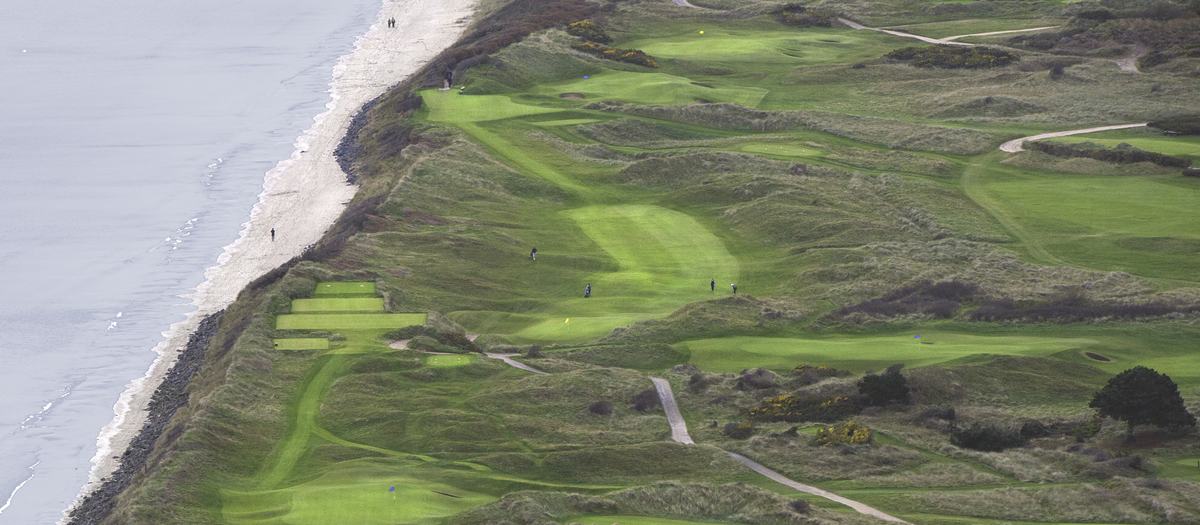
Amateur golf tournaments: a complete guide
Event types, entry routes and what to prepare before your first start.

World amateur golf ranking explained
Power ratings, divisors and the 104-week window, in plain terms.
Choosing a golf coach
What to ask before a first lesson and how to judge a coaching style.
Format: how a typical amateur championship works
- 72 holes of stroke play over four days is the standard for national and international amateur championships, often with a cut after 36 holes.
- Match play championships run a stroke-play qualifier first, then a knockout bracket, which is why a player can miss a final without ever losing a round.
- Mixed and team events use pairs formats, foursomes and four-ball, where the order of play is fixed before the round and cannot be changed on a whim.
- Net competitions apply handicaps; scratch competitions do not. The difference decides what prizes an amateur may accept, see Rule 3 of the Rules of Amateur Status.
Schedule: what a championship week looks like
Day 1 and Day 2: qualifying
Two stroke-play rounds, usually on two different courses or from two different tee rotations, so that no half of the field gets an easier draw. A cut to the leading scores and ties follows.
Day 3: moving day
The field plays in score order. Tee times tighten, groups shrink to threes or twos, and scoring averages drop because the remaining field is stronger.
Day 4: final round
Leaders out last, in pairs. In match play championships this is the day the bracket narrows to the final, with semi-finals in the morning.
Experiences worth reading first

Amateur golf tour: structure and participation
Stages, rules and the entry requirements behind a multi-event tour.

Amateur golf membership and tour structure
What membership of an amateur tour covers and what it does not.
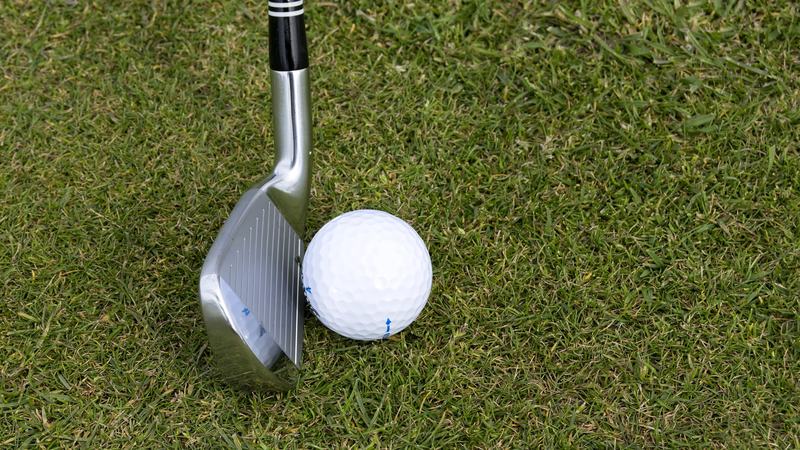
Golf equipment for amateurs
Clubs, balls and the accessories that actually change a round.

Top courses for amateur events
Venues that host amateur fields, and what makes them suitable.

Amateur golf players: preparation
How competitive amateurs build a season and arrive ready.

Amateur golf news and trends
What has changed recently in rules, rankings and access.
Sources
- USGA, Handicap FAQ: maximum Handicap Index of 54.0 and the best 8 of 20 calculation.
- The R&A and USGA, WAGR criteria, effective 1 January 2026: 104-week window, Power method, divisors.
- USGA, Model Local Rule G-10, 2021 announcement, effective 1 January 2022: 46-inch club length option.
- USGA, Rules of Amateur Status, Rule 3, effective January 2022: prize limits for amateurs.
Looking for the next event? Browse the tournament guides.